
AI Ad Creatives for Amsterdam Brands: More Variants, Honest Claims
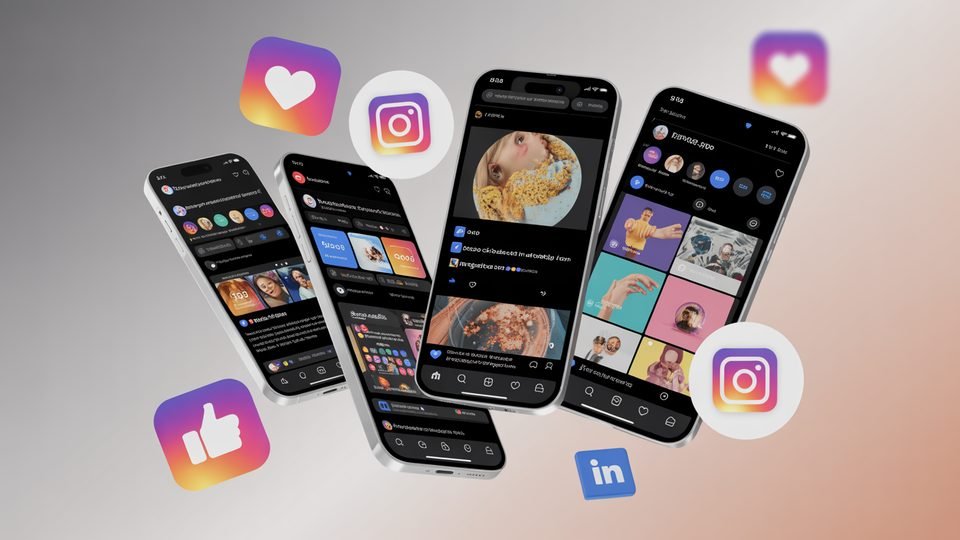
Amsterdam brands advertise in a crowded feed. A hotel, a restaurant, a bike shop, a tour company — whatever the business, its ads compete with everything else on a phone, in two languages, for visitors as well as locals. One good ad is not enough. Testing ten variants, learning which one works, and making ten more — that is what wins. Doing it by hand, one ad at a time, is slow and expensive.
AI ad creatives change the speed, not the judgement. AI tools can produce more variants faster — different hooks, different images, different lengths — so a brand can test properly instead of guessing. The judgement still belongs to people: what is true, what is legal to claim, and what the brand actually looks like. This article explains how AI ad creatives work for Amsterdam brands, what to brief, and where the honest limits are.
What AI ad creatives cover
AI ad work for brands is not one job. A useful service usually covers:
- Variant generation — one offer turned into many ad versions: different hooks, headlines, images and formats, so testing is real instead of a single guess.
- Short-form video ads — Reels, Shorts and TikToks cut and captioned for paid placement, with the hook in the first three seconds.
- AI UGC-style ads — presenter-style ads that look like a real person recommending the product. These must be disclosed honestly: an AI presenter is never passed off as a real customer.
- Static and carousel ads — images and carousels for feeds, built around one clear message per frame.
- Testing and iteration — the winning variant kept, the losing ones dropped, and the next round built from what actually worked.
If a provider only generates images, the brand still has a gap everywhere else. Ask upfront which formats are standard, and how testing is actually run.
Why Amsterdam brands test AI ads
The case for AI ads is speed and volume, honestly stated. A brand that can test ten variants in a week learns faster than a brand that tests one a month. For Amsterdam, that matters twice: the audience is mixed — Dutch locals, expats, tourists — so one message rarely fits everyone, and variants let a brand speak to each group properly.
What AI does not do is decide what is true. An AI tool will happily write a claim the business cannot back up, invent a review, or show a product the business does not sell. That is why the human check matters more, not less, when AI is involved. Every claim in an ad must be one the business can prove, and every AI presenter must be labelled as AI, never presented as a real customer or a real review.
Nexolent describes itself as a white-label production partner — "Content, handled." — with AI ads among its main services, and it claims 2k+ projects delivered. That figure is a Nexolent claim; judge it alongside samples of real work, not instead of them. For an Amsterdam brand, the relevant test is narrower: can this team produce variants fast, keep every claim honest, and take feedback without a fight?
How to brief AI ad creatives so they work
Most AI ad work disappoints for briefing reasons, not tool reasons. Before the first variant, settle:
- The offer — one clear thing being sold, in the business's own words, with the real price or terms.
- The audience — locals, tourists, or both, and in which language, so variants are built for real people.
- The proof — what the business can actually claim: real reviews, real photos, real results, nothing invented.
- Brand rules — logo, colours, fonts and words that must never appear, so AI output stays on-brand.
- Who approves, in how many rounds, and by when — so an ad does not stall waiting for feedback from three different people.
- What must never be claimed — results, reviews or endorsements the business cannot back up, in the ad or its caption, and no AI presenter passed off as a real customer.
With those six answered, a production team can test week after week without re-explaining the brand each time.
The mistakes that make AI ads look cheap
- An AI presenter presented as a real customer. This is the fastest way to lose trust. Disclose AI clearly, every time.
- Claims the business cannot prove. "Best in Amsterdam" or a made-up discount will be checked, and the damage lasts longer than the ad.
- A hook that takes too long. Short-form gives you about three seconds. If the point arrives at second ten, the viewer is already gone.
- Variants that are the same ad. Ten versions with the same hook and the same image is not testing; it is repetition.
- Feedback in drips. Ten separate comments across a week produce ten rounds of changes. One consolidated round, from one approver, produces one.
What to check in the first month
Do not judge an AI ads partner on a sales call. Judge the first month:
- Did the variants actually differ, or were they the same ad with a new colour?
- Were deadlines hit without the brand chasing?
- Was every claim in every ad one the business can prove?
- Was AI disclosure clear wherever an AI presenter was used?
- Did the winning variant beat the original — and if so, was it kept and built on?
If the answer to the first four is yes and testing is genuinely happening, the partnership is working. If claims are invented or disclosure is missing, no amount of cheap volume is worth it.
FAQ
Is an AI presenter a real person? No. An AI presenter is generated, not a real customer, and must be disclosed as AI. It must never be presented as a real review or a real recommendation.
Will my customers know AI was used? They should, wherever it matters — especially for presenter-style ads. Honest disclosure builds trust; hiding it destroys it when it is found out, and it will be found out.
How many variants should we test? Enough to learn something: several genuinely different hooks and formats, not dozens of near-identical copies. Quality of difference matters more than quantity.
Does AI advertising work for one-off campaigns, or only ongoing? Both, but ongoing testing is where it pays off: each round learns from the last. A one-off campaign is still a fair way to test a partner before committing.
What should the brand still do itself? Keep the offer, the claims and the approvals. The production partner handles the volume and the delivery workload behind that — but the brand owns what is true.
Next step: send one offer and a sample of the ad style your brand expects, and Nexolent will confirm what the first variant set includes. Use WhatsApp (UK) https://wa.me/447575150984, WhatsApp (Pakistan) https://wa.me/923149633145, or email info@nexolent.com.
Get in touch
Ready to talk about your project? Reach Nexolent directly:
WhatsApp (UK) WhatsApp (Pakistan) Email us